Recycling and Sustainability for Landscaping Kentish Town
 Landscaping Kentish Town is built around a practical, low-waste approach that supports greener outdoor spaces while reducing the environmental impact of every project. From careful sorting of green waste to choosing reusable materials where possible, our work is shaped by the idea that good landscaping should improve a place without creating unnecessary waste. Across the local area, where boroughs increasingly encourage better waste separation and cleaner recycling streams, our methods are designed to fit in with those expectations and help keep materials in circulation for longer.
We set a clear recycling percentage target for our projects: at least 85% of suitable non-hazardous waste is aimed to be diverted from landfill through reuse, recycling, or recovery. That means timber, soil, green clippings, stone, cardboard, plastics, and metal items are assessed for their best possible next use. In practice, Landscaping in Kentish Town is not just about removing waste; it is about managing it responsibly, reducing contamination, and making sure the right material reaches the right facility.
One of the most important parts of our sustainability approach is working with local transfer stations that can separate loads efficiently. Using nearby facilities helps cut travel distances and supports a lower-carbon waste route. Depending on the material type, waste can be directed to stations that handle soil and rubble, mixed recyclables, or green waste, allowing a more detailed sorting process than a simple mixed skip model. This is especially relevant in areas where boroughs encourage household-style separation of paper, metals, glass, and food waste, because construction and landscaping waste also benefits from careful segregation at source.
 Our teams apply site-level sorting to make sure recyclable materials are kept clean and uncontaminated. For example, untreated wood can often be recovered for recycling streams, while prunings, grass cuttings, and leaf matter may be sent for composting or soil improvement processes. Where possible, hardcore and paving offcuts are separated for aggregate recovery, and metals are collected for specialist recycling. This attention to detail helps Landscaping Kentish Town reduce disposal volumes and supports a more circular local economy.
The boroughs surrounding Kentish Town have also increased public awareness around waste separation, which complements our own working methods. Residents are now more familiar with sorting dry recyclables from general waste, and that culture of separation is useful in landscaping too. When we tidy borders, clear garden waste, or remove old site materials, we work to keep recyclable items distinct from soil, packaging, and contamination. The result is a cleaner process that can improve recycling outcomes and make collection and processing simpler for downstream partners.
 Sustainability is also reflected in our choice of transport. We use low-carbon vans wherever possible, including efficient vehicles designed to reduce fuel use and emissions on local journeys. These vans are well suited to travelling between Kentish Town sites, transfer stations, and suppliers without creating unnecessary exhaust output. In a densely used urban setting, even small improvements in fleet efficiency make a meaningful difference, especially when combined with route planning that avoids extra mileage and idling.
Another part of our recycling commitment is collaboration with charities and community reuse organisations. Items that are still in good condition, such as planters, benches, decorative stone, edging, or certain timber pieces, may be suitable for donation or reuse where safe and appropriate. By partnering with charities, Landscaping Kentish Town helps extend the life of usable materials and supports local causes at the same time. This reduces waste and gives practical materials a second purpose rather than sending them straight to disposal.
We also prioritise the reuse of landscape materials wherever a project allows it. Soil that has been carefully screened may be reused on-site for level changes or planting beds, while surplus stones or bricks can sometimes be set aside for future features. In smaller residential gardens, even modest amounts of reclaimed material can reduce the need for new deliveries. That approach lowers embodied carbon and limits the environmental cost of extraction, transport, and manufacturing associated with brand-new materials.
In addition, our recycling practices are shaped by the kind of mixed urban environments found across Kentish Town. Local projects can generate everything from hedge trimmings and turf to broken pots, packaging, and small quantities of inert waste. By planning separate containers for each material stream, landscaping in Kentish Town can maintain higher recovery rates and reduce the chance that recyclable items are contaminated by general waste. This is especially important where borough waste systems already place a strong emphasis on cleanliness and accurate sorting.
A Practical Low-Waste Approach
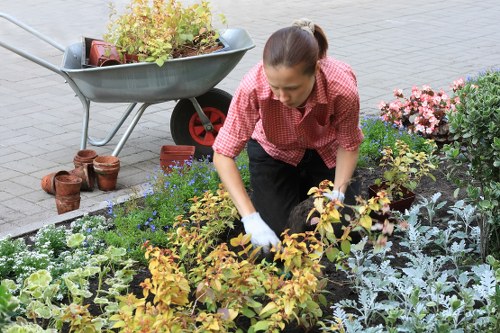 Our recycling strategy is not a single action but a process that begins before work starts and continues through collection, transport, and final handling. Each site is assessed for the most efficient material flow, and the team looks for opportunities to reduce packaging, bulk deliveries, and unnecessary disposal. By combining local transfer stations, careful sorting, and efficient logistics, Landscaping Kentish Town can deliver greener outcomes without compromising on quality.
We also understand that sustainability is measured not only by recycling rates, but by the decisions made every day on site. Choosing durable materials, avoiding over-ordering, and reusing components where possible all contribute to a cleaner profile. For example, a project may produce only a small volume of waste if broken slabs are reused as sub-base material, green waste is composted, and metal fixtures are separated immediately. These are simple but effective actions that improve the overall recycling percentage target.
The same approach supports better outcomes for the wider environment. Lower emissions from low-carbon vans, fewer miles to local transfer stations, and stronger links with charities all work together to create a more responsible landscaping service. By staying attentive to borough expectations around waste separation and material recovery, Landscaping Kentish Town remains aligned with the sustainability goals shaping the area.
Keeping Kentish Town Greener
 Looking ahead, our aim is to continue improving waste recovery rates and widen the range of materials that can be reused, recycled, or donated. We will keep refining how loads are separated, how routes are planned, and how reusable items are identified before they leave site. With a focus on Landscaping Kentish Town, low-carbon vans, local transfer stations, and charity partnerships, our recycling and sustainability commitment is designed to support healthier gardens and a cleaner local environment.
Landscaping Kentish Town is proud to take a practical, thoughtful approach to sustainability that reflects the needs of the area. By treating waste as a resource, respecting local recycling systems, and making environmentally responsible choices at every stage, we help build landscapes that look good and work better for the long term.